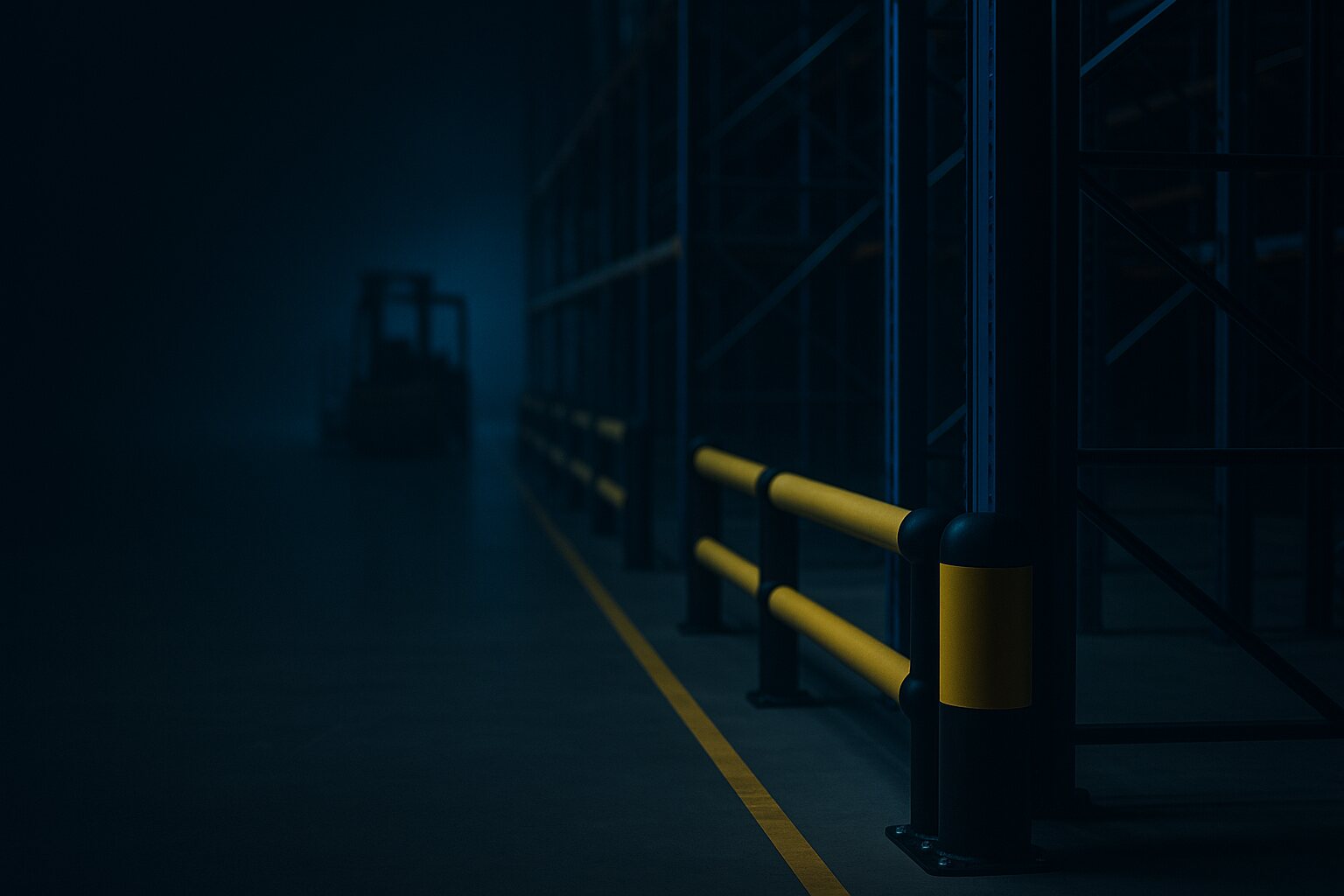
Protection elements
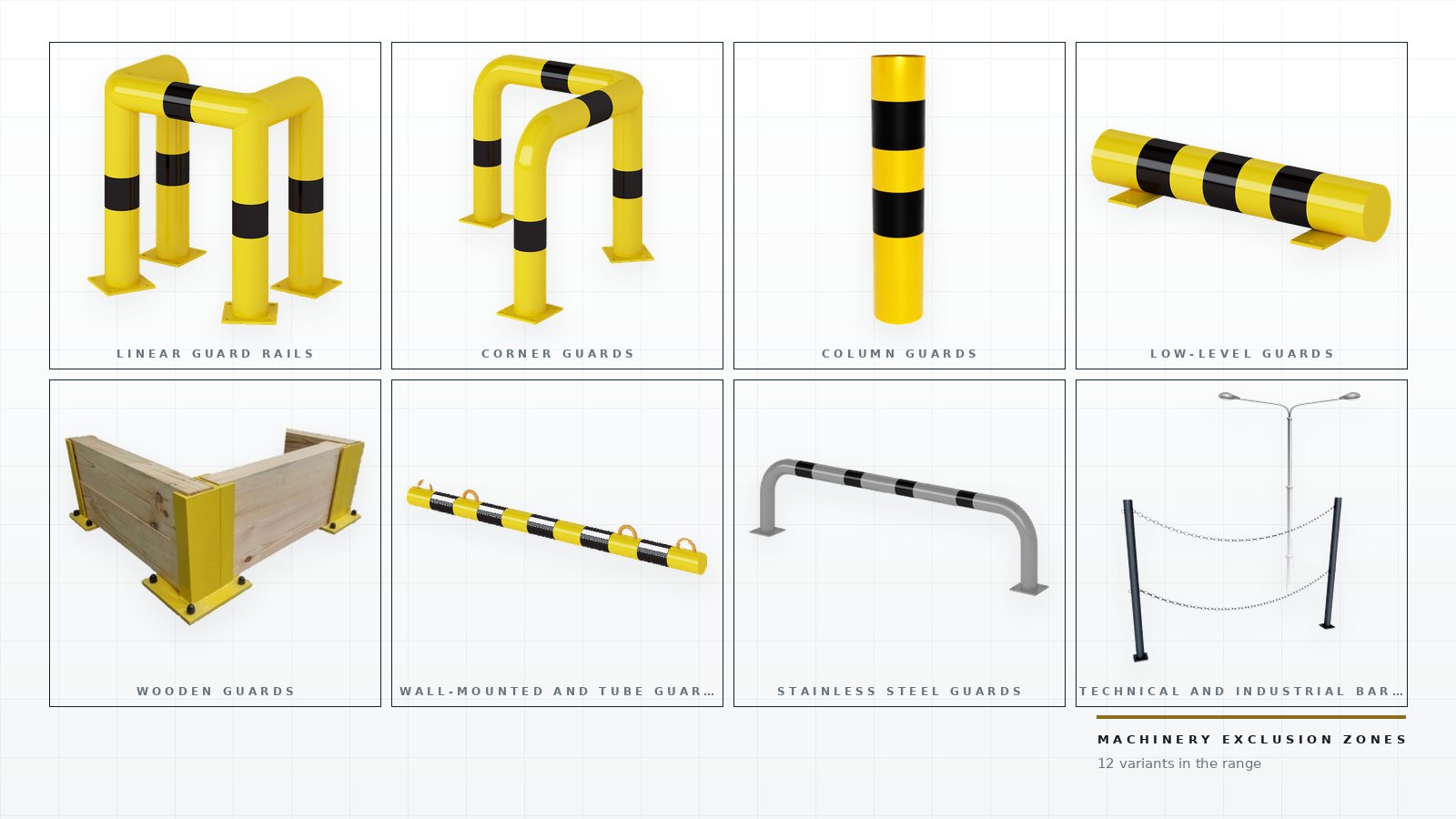
Linear guard rails
Protecting walkways and walls from forklift impact.
Corner guards
Protecting wall corners, gateways and passages.
Column guards
Shielding structural columns from impact.
Low-level guards
Low profiles guiding traffic at floor level.
Rack-end and racking guards
Protecting racking and storage zones from impact.
Wooden guards
A solution for interiors and lower-load applications.
Wall-mounted and tube guards
Guards fitted above the floor and tube guards at gateways.
Stainless steel guards
For hygienic zones and aggressive environments.
Energy-absorbing barriers
Elements that take impact energy in warehouses and halls.
Technical and industrial barriers
Enclosing workstations, switchgear and service zones.
Self-closing gates
Controlled passage through the enclosure without dismantling.
Wheel guides and parking stops
Guiding forklifts at gateways and stops for parking bays.
Guard rails and hall enclosures: matching to risk
Protection inside a building rests on two groups of elements: guard rails that absorb impact energy from forklifts, and barriers that mark out walkways and zones. A guard rail is selected for vehicle mass and mounting position, because the profile, height and anchoring decide whether an impact protects the structure or loads it further.
The category covers linear, corner, column and low-level guard rails, rack-end guards and racking protection, wooden and wall-mounted guards, stainless steel versions, tube guards, energy-absorbing barriers for warehouses and halls, technical and industrial barriers, self-closing gates, wheel guides and parking stops.
Planning is best started from forklift routes and the places where collisions actually happen: corners, gateways, rack ends and pedestrian crossings. Signal colours have to match the site's zone marking, and the anchoring method must suit the thickness and condition of the industrial floor slab.
Products in this category
Where it works
What the quotation confirms
Frequently asked questions
Steel or flexible polymer?
Can it be installed without shutting the hall?
When stainless guards?
We will lay out zones and protection for your hall.
Send the run length, site conditions and deadline, and we will come back with a configuration and a quotation.