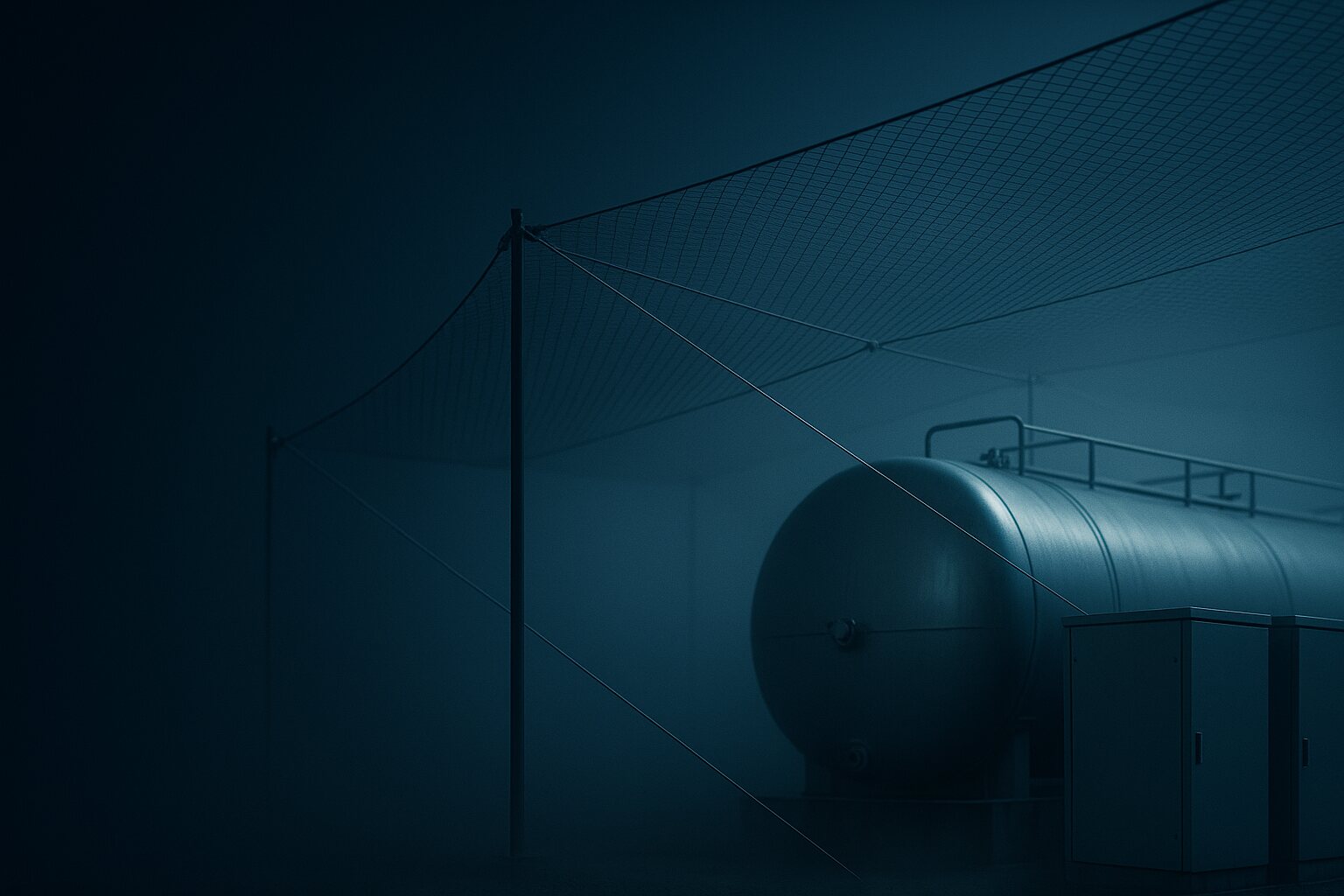
Elements of the solution
Protective netting
Covering a defined area with netting of selected mesh and strength.
Supporting structures
Masts and frames holding the cover above the protected point.
Point covers
Protection for individual devices, tanks and cabinets.
Side screens
Limiting horizontal approach at low altitude.
Temporary solutions
Covers for the duration of an event, works or heightened risk.
Design concept
Analysis of sensitive points and a proposed extent of cover.
Physical covers: extent, structure, limitations
A physical anti-drone layer is a net spanned on a supporting structure over the protected point. Three things decide the solution: the size of the area, the wind and snow loads on the structure, and service access to the covered equipment. Cover is always designed for a defined point rather than for the whole plant.
The category covers protective netting of selected mesh and strength, masts and supporting frames, point covers for individual devices, tanks and cabinets, side screens limiting horizontal approach, temporary solutions for an event or works, and a design concept with an analysis of sensitive points.
The limitations are stated openly: no physical system guarantees complete neutralisation, and effectiveness depends on configuration, installation conditions, threat characteristics and operational procedures. The physical layer complements detection systems rather than replacing them, and it is subject to the same approvals as any other structure on site.
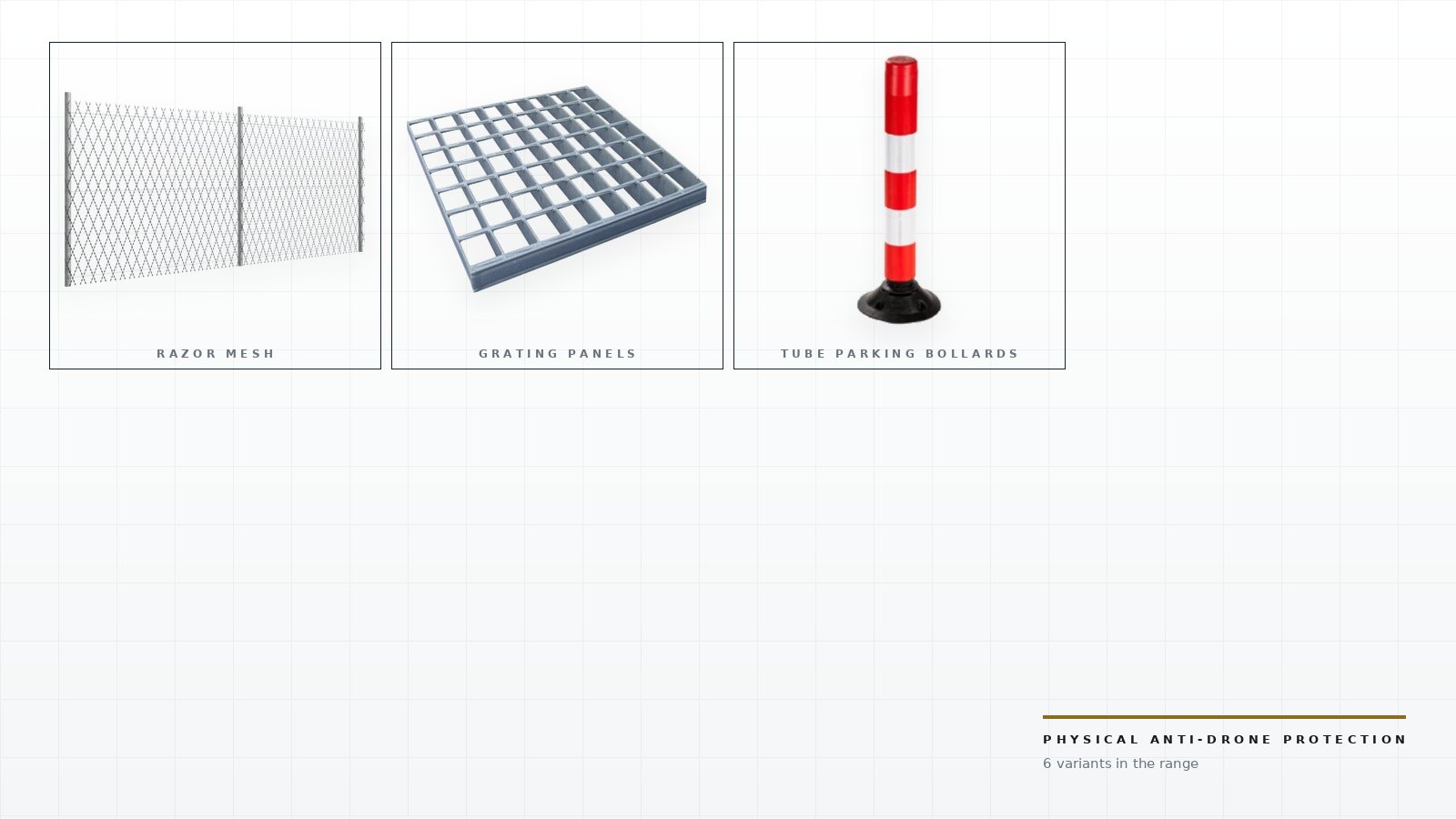
Products in this category
Where it works
What the quotation confirms
Frequently asked questions
Does this guarantee no drone reaches the site?
How does it differ from detection systems?
Can a whole plant be covered?
We will show what can be covered, and to what extent.
Send the run length, site conditions and deadline, and we will come back with a configuration and a quotation.